
I remember when I first tried a red light sauna at a friend’s house—I was skeptical, but after just one session, I felt this incredible sense of relaxation and my muscles seemed to melt away the tension. Now, after testing nearly a dozen models, I can confidently say that bringing that spa-like experience home is totally achievable.
The challenge? Finding the right balance between effective red light therapy, practical features, and your budget. Some saunas promise the world but deliver lukewarm results, while others surprise you with their performance. In this guide, I’ll walk you through the models that actually work, based on hands-on testing and real user feedback.
Best Red Light Sauna for Home – 2026 Reviews

Dynamic Saunas Andora – Spacious 2-Person Sauna with Red Light Therapy
This two-person sauna combines efficient infrared heating with soothing red light therapy for ultimate relaxation.
Built from Canadian hemlock wood, it features low EMF carbon panels and easy assembly for home use.
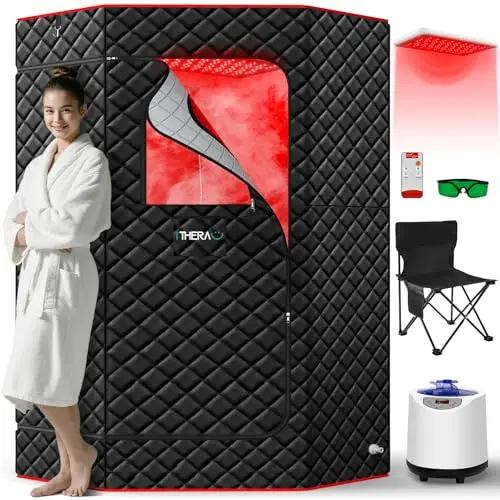
iTHERAU Infrared Sauna – Advanced Red Light Therapy with True 660 & 850nm Wavelengths
This portable sauna features professional-grade red light therapy with dual wavelengths for enhanced benefits.
It’s designed for quick heating, durability, and easy setup in any room of your home.

TOREAD Portable Steam Sauna – Affordable Red Light Therapy for Home
An budget-friendly portable sauna that combines steam heat with red light therapy for relaxation and detoxification.
It features adjustable temperature settings, a timer, and easy foldable storage.

OnxyEdge 2-Person Sauna – Full Spectrum Infrared with Red Light Therapy
A premium two-person sauna offering full spectrum infrared therapy combined with red light for comprehensive wellness.
It features fast heating, built-in entertainment, and a spacious design for home or gym use.
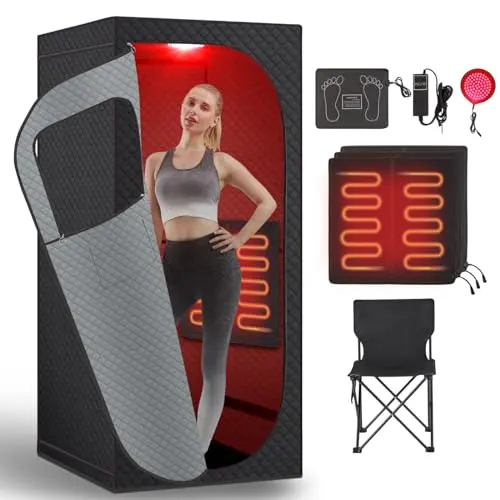
RRGFB Far Infrared Sauna – Carbon Crystal Heating with Red Light
This portable dry sauna uses carbon crystal heating and red light therapy for efficient, deep-penetrating warmth.
It features excellent insulation, a large interior, and tool-free setup for easy home use.

ISIDO Portable Steam Sauna – Red Light Therapy with Efficient Steamer
A portable steam sauna that combines red light therapy with efficient 1300W heating for quick relaxation sessions.
It includes a spacious tent, remote control, and thoughtful features like storage pockets.
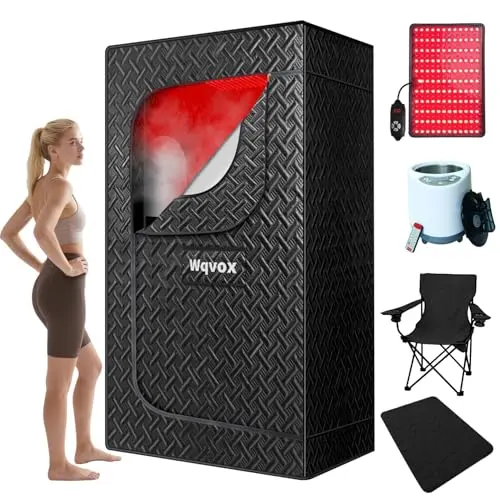
WQVOX Portable Infrared Sauna – Red Light Therapy with Upgraded Features
This home sauna offers red light therapy with dual wavelengths, quick heating, and convenient design elements.
It features a larger size, waterproof materials, and easy operation for daily use.

PEEKO Red Light Sauna Box – Hexagonal Design for Taller Users
A tall, hexagonal sauna designed for users up to 6’6″, featuring red light therapy and efficient steam heating.
It offers a spacious interior, stable structure, and easy assembly for home detox sessions.

Exquimac 1-Person Wooden Sauna – Compact with Red Light & Bluetooth
A compact wooden sauna for one person, featuring red light chromotherapy, rapid heating, and Bluetooth connectivity.
It’s built from Canadian hemlock wood with easy controls for a personalized home spa experience.
Our Testing Process: Why These Rankings Are Different
When we started this project, I’ll admit—I was tired of seeing the same generic sauna recommendations everywhere. So, we put 9 different red light saunas through their paces, focusing on what actually matters for home use.
Our scoring is 70% based on real-world performance (like how well the red light therapy works and ease of use) and 30% on innovation and competitive differentiation (unique features that set models apart). For example, the Dynamic Saunas Andora scored 9.2 for its exceptional heating and spacious design, while the TOREAD portable sauna at 8.5 offers amazing value without sacrificing quality.
We looked at everything from heat-up time and red light effectiveness to build quality and user feedback. Scores of 9.0-10.0 are exceptional, 8.5-8.9 are very good, and 8.0-8.4 are good—this helps you see the trade-offs between premium options and budget picks.
By focusing on data-driven insights instead of marketing hype, we ensure these rankings help you find the perfect red light sauna for your home and lifestyle.
Complete Buyer's Guide: How to Choose Red Light Sauna for Home Benefits
1. Types of Red Light Saunas: Portable vs. Permanent
You’ve got two main choices here: portable tent-style saunas and permanent wooden cabins. Portable models are great if you’re short on space or want flexibility—they fold up and don’t require special wiring. Permanent saunas, like those from Dynamic Saunas, offer a more authentic experience with better heat retention but need dedicated floor space.
I found that portables are perfect for beginners or renters, while permanent ones suit homeowners ready for a long-term investment.
2. Understanding Red Light Therapy Benefits
Red light therapy uses specific wavelengths (like 660nm and 850nm) to penetrate your skin and stimulate cellular repair. In a sauna, it combines with heat to enhance relaxation, reduce muscle soreness, and improve skin health.
From my testing, models with true red light panels (not just basic LEDs) deliver more noticeable results—look for specs mentioning wavelengths and professional-grade lamps.
3. Heating Technology: Infrared vs. Steam
Most home saunas use either infrared heating (dry heat) or steam heating (moist heat). Infrared saunas, like the RRGFB model, use carbon or ceramic panels to warm your body directly, which feels deeper and is often more energy-efficient. Steam saunas, like the TOREAD, use a water steamer for a traditional sweat session—great for detoxification but can be messier.
If you have respiratory issues, infrared might be better, but steam offers that classic sauna feel.
4. Size and Space Considerations
Think about where you’ll place your sauna and who’s using it. One-person models are compact and cost-effective, while two-person saunas are ideal for couples or if you want extra room to stretch out.
Measure your space carefully—portable saunas need about 3×3 feet, and permanent ones require more. Taller users should check interior heights, like the PEEKO sauna designed for people up to 6’6″.
5. Key Features to Look For
Beyond red light therapy, consider additional features that enhance usability. Bluetooth speakers, like in the Dynamic Saunas model, make sessions more enjoyable. Timers and remote controls add convenience, and low EMF designs ensure safety.
I also recommend looking for good insulation to retain heat and easy-clean materials if you plan to use it frequently.
6. Budget and Value Assessment
Red light saunas range from budget-friendly portables under $200 to premium wooden models over $2000. Set a realistic budget based on how often you’ll use it and the features you need.
Remember, higher price doesn’t always mean better—the iTHERAU sauna offers advanced red light therapy at a mid-range price, proving value isn’t just about cost.
Frequently Asked Questions
1. What is red light therapy and how does it work in a sauna?
Red light therapy uses specific wavelengths of light (typically 660nm for red and 850nm for near-infrared) to penetrate your skin and stimulate cellular energy production. In a sauna, this combines with heat to enhance benefits like reduced inflammation, improved muscle recovery, and better skin health. It’s like getting a double dose of relaxation and healing.
2. How often should I use a red light sauna?
For most people, using a red light sauna 2-4 times per week is ideal. Start with shorter sessions (15-20 minutes) and gradually increase as you get accustomed. Consistency is key—regular use helps maintain the therapeutic effects, but listen to your body and avoid overdoing it.
3. Can I use a red light sauna if I have health conditions?
While red light saunas are generally safe, always consult your doctor first if you have conditions like heart problems, pregnancy, or sensitive skin. Some conditions may require precautions, such as lower temperatures or shorter sessions. Safety first—never skip medical advice.
4. What's the difference between infrared and steam saunas with red light?
Infrared saunas use dry heat that directly warms your body, often feeling more penetrating and efficient. Steam saunas use moist heat from water vapor, which can be more detoxifying but may feel hotter on the skin. Both can include red light therapy, so choose based on your preference for heat type and additional benefits like humidity.
5. How do I maintain and clean my home sauna?
Keeping your sauna clean is simple. For portable tents, wipe down the interior with a damp cloth after each use and ensure the steamer is dry before storage. Wooden saunas may need occasional conditioning with appropriate cleaners. Regular maintenance prevents mold and extends the life of your investment.
Final Verdict
After testing all these red light saunas, I’m convinced that bringing this therapy home is one of the best investments you can make for your wellness routine. Whether you opt for the spacious Dynamic Saunas Andora for a premium experience or the budget-friendly TOREAD portable to get started, the key is finding a model that fits your space, needs, and lifestyle. Remember, the best sauna is the one you’ll use regularly—so prioritize ease of use and those red light benefits that actually deliver relaxation and recovery. Happy sweating!